Packaging

How to Host a Fundraiser Without Hurting Your Small Business

Giving Back Without Giving It All Away

This October, for Breast Cancer Awareness Month, we originally planned to host a fundraiser of our own.

But the more we thought about it, the more we felt there might be an even more meaningful way to give back. Instead of hosting one fundraiser ourselves, we wanted to help the bakers in our community host fundraisers of their own.

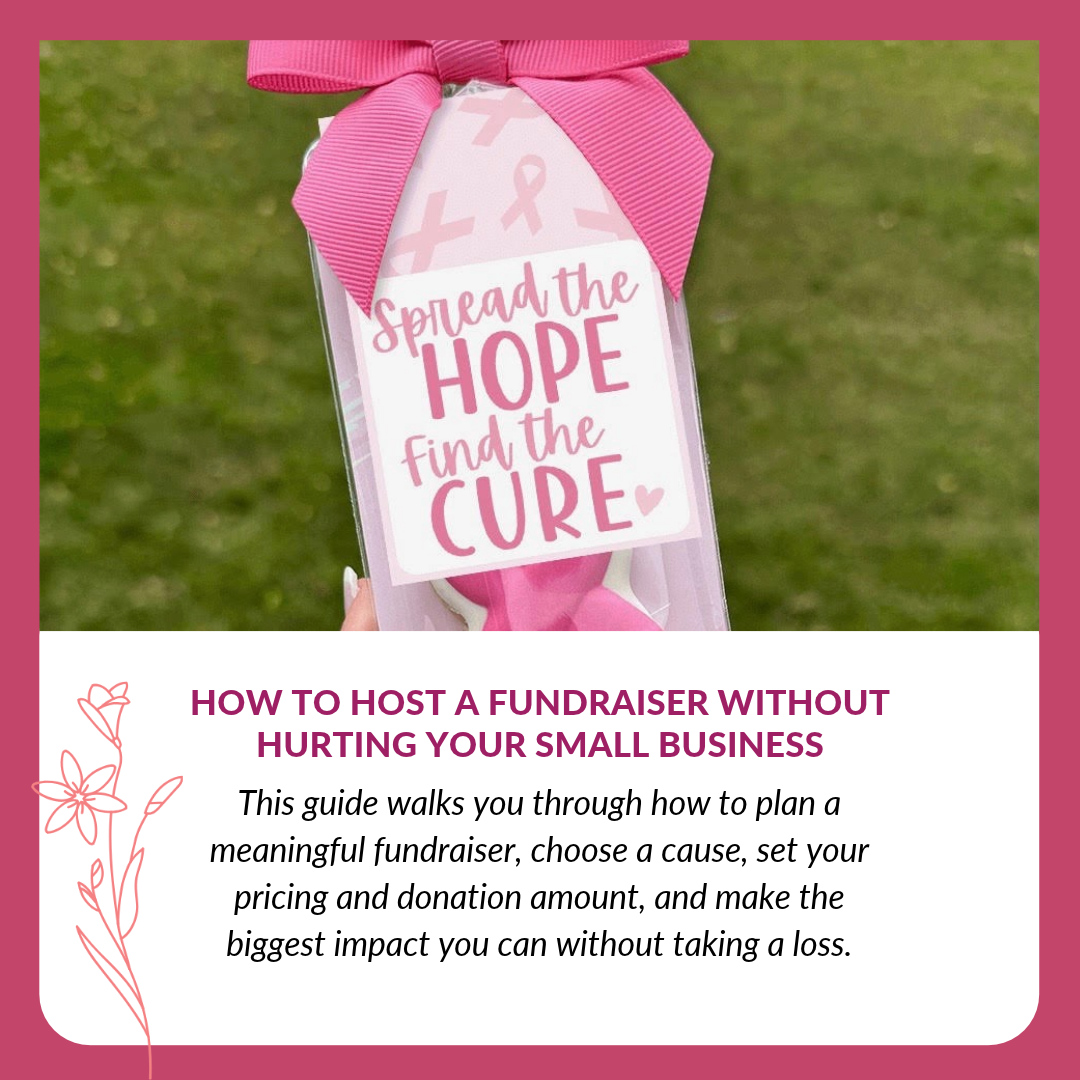
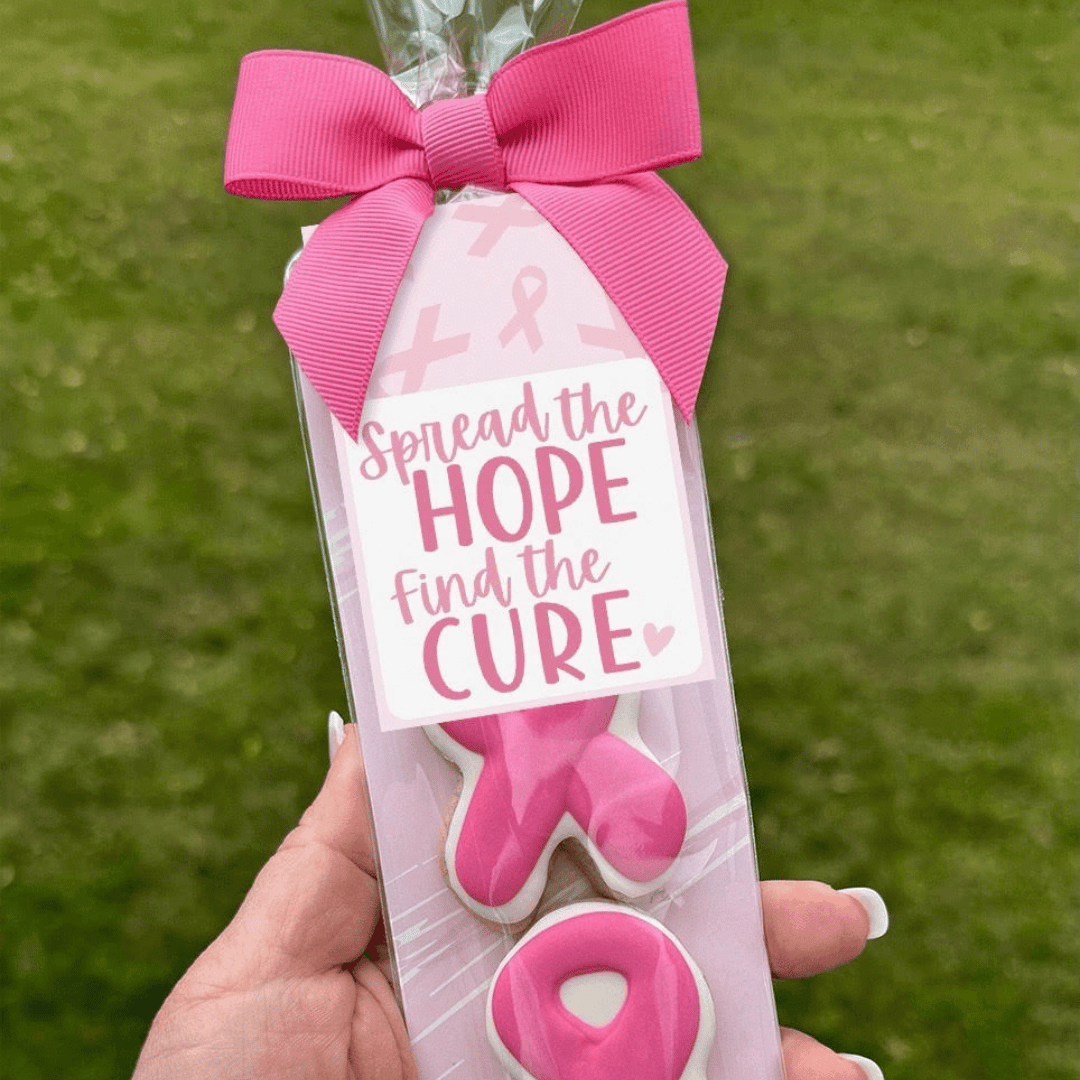
So we created a Breast Cancer Awareness packaging bundle and discounted it by 70%. The goal is simple: lower one of the costs that comes with hosting a fundraiser so you can put more of each sale toward the cause you choose to support.

Please note: The Breast Cancer Awareness bundle is limit 1 per person.

We know that most of our customers are small business owners. You want to give back when you can, but ingredients, packaging, supplies, labor, and overhead all add up. Supporting a cause should not mean putting your own business in a difficult position.

That is what this guide is all about.

Throughout this blog, we are going to focus on breast cancer causes in honor of Breast Cancer Awareness Month, but the same principles can be used to create a meaningful fundraiser for just about any cause that matters to you.

We will walk through how to choose a cause, find an organization you feel good supporting, keep your fundraiser simple and cost effective, price your treats, decide how much to donate, and clearly communicate with your customers about where their money is going.

You do not have to raise thousands of dollars to make a difference. Sometimes a small fundraiser, multiplied across a community, can have a much bigger impact than you might think.

Choose a Cause That Speaks to You

Breast cancer is a big cause, and "supporting breast cancer awareness" can mean a lot of different things. There are organizations funding research, helping patients afford treatment, providing transportation to appointments, delivering meals during chemotherapy, supplying wigs and head coverings, offering emotional support, and helping families manage the many unexpected costs that can come with a diagnosis.

The first step in planning your fundraiser is deciding what kind of impact feels most meaningful to you.

Maybe breast cancer research is especially important to you, and you want your donation to help fund better treatments and, hopefully one day, a cure. Maybe you would rather keep your fundraiser closer to home and support an organization helping patients in your own community. There is no single "right" place to donate.

Sometimes a smaller, more specific cause can also make your fundraiser feel much more tangible. A $100 or $200 donation may feel like a drop in the bucket when you are thinking about something as enormous as cancer research, but that same amount could make a very real difference through a local patient-support program.

Maybe the money you raise helps provide ten meals to patients going through treatment. Maybe it helps cover gas or transportation to appointments. Maybe it helps a young woman purchase a wig after losing her hair during chemotherapy so she can feel a little more like herself again.

Those things matter.

You do not have to raise thousands of dollars for your fundraiser to be worthwhile. Choose a cause that speaks to you, learn what the organization actually does, and think about the kind of impact you would feel proud to tell your customers they helped make possible.

Not Sure Where to Start?

If you'd like your fundraiser to support people in your own community, start local! Search Candid/GuideStar for breast cancer or cancer-support nonprofits in your area, check your local 211 directory, or reach out to hospitals and cancer treatment centers near you.

You can also look through Susan G. Komen and American Cancer Society resources to learn what programs are available in your area.

And don't limit your search to organizations with "breast cancer" in their name. A local cancer patient-assistance fund may help provide meals, rides to treatment, wigs, financial assistance, or other support to breast cancer patients without being exclusively dedicated to breast cancer.

Know Where Your Money Is Going

Once you have a cause in mind, take a little time to learn more about the organization before you start fundraising.

You do not need to become an expert in nonprofit finances, but you should feel confident that the organization is legitimate, understand what kind of work they do, and know enough to explain to your customers where their money is going.

Start by looking through the organization’s website. Read about their programs, who they serve, and how donations are used. You can also look them up through resources like the IRS Tax Exempt Organization Search, Candid/GuideStar, or Charity Navigator to verify their nonprofit status and learn more about their work.

If you are considering a smaller local organization, do not be afraid to reach out directly. Sometimes the most meaningful programs are small enough that they do not have a huge website or a national profile.

Ask questions like:

  • What does a donation of $100, $250, or $500 help provide?
  • Can donations be designated to a specific program?
  • Do you offer direct support like meals, transportation, wigs, or patient assistance?

Those answers can help you understand the real impact of your fundraiser and make it much easier to explain that impact to your customers.

It is also important to make sure your wording matches what the organization actually does. If your donation goes into a general patient-support fund, say that. If the organization allows you to specifically support transportation, meals, or another program, then you can be more specific.

You should be able to answer two simple questions before you start selling:

Who are we raising money for?

What does this organization do with the money?

If you feel good about those answers, you are in a good place to move forward.

Keep It Simple

For a fundraiser like this, we recommend keeping your product small, simple, and easy for customers to justify adding onto an order, especially when there is a meaningful cause attached to it.

The easier it is for you to make, the better.

Choose something that can be produced in large batches with as little extra time and cost as possible. That might be one simple cookie shape, like a pink ribbon, three dipped pretzel rods in a sleeve, or a single cake pop.

Keep the decorating simple too. Stick with one main color, add a few sprinkles if you want to dress it up, and resist the urge to turn your fundraiser item into something overly detailed or time consuming.

The goal is to keep your cost per treat as low as possible so that more of each sale can go toward your donation.

A simple treat can still feel special, especially when your customers know that their purchase is helping support something meaningful.

Set Your Price

This is the part that can make fundraising feel a little intimidating, especially for small business owners. You want to donate as much as you can, but you also cannot afford to lose money on every treat you sell.

The good news is: your ingredients, packaging, and business overhead do not need to become part of your donation.

Start by figuring out how much each fundraiser treat actually costs you to make. Include your ingredients, packaging, decorating supplies, and the other direct costs that go into producing it. If you are not sure how to calculate your cost per item, we have a full pricing guide that walks you through it step by step. 

Once you know your cost per treat, you can decide how much you would like to donate from each sale.

One area where you can choose to give a little more is your time. Normally, your pricing should account for your labor, but for a fundraiser you may decide to donate your labor entirely or simply charge yourself a little less for your time than you normally would. That is completely up to you. The important thing is that you are choosing what you can comfortably give.

This is also why we discounted our Breast Cancer Awareness bundle so heavily. By taking 70% off the packaging, we are hoping to remove a little bit of that overhead for you, giving you more room to make a meaningful donation from each treat without your business having to absorb all of the cost.

Once you have your numbers, your fundraiser pricing can be pretty simple:

Cost to make each treat + the amount you want to donate = your starting price

For example, if your fundraiser treat costs $2.00 to make and you would like to donate $2.00 from every sale, your starting price would be $4.00.

And remember, that does not necessarily have to be your final price. If $4.00 feels a little low for your market, you might price it at $4.50 or $5.00 instead and add that extra amount to the donation.

Customers are often comfortable paying a little more for a fundraiser item when they know exactly what their purchase is supporting. A simple treat with a slightly higher price tag can still feel like an easy add-on when your customer knows that $2, $3, or more from their purchase is going directly toward a cause they care about.

Be Clear About What You’re Donating

Once you have your price and donation amount figured out, make sure your customers know exactly what their purchase is supporting.

Whenever possible, be specific.

Instead of saying, "A portion of proceeds will be donated," try something like:

"$2 from every treat sold will be donated to [Organization]."

That kind of wording is simple, easy to understand, and gives your customers a clear picture of the impact their purchase is making.

It also makes things much easier for you when the fundraiser is over. If you sold 75 treats and committed to donating $2 from each one, you already know you raised $150.

If you choose to donate a percentage instead, make sure you are clear about what that percentage is based on. “10% of sales” and “10% of profits” can mean very different things, so avoid wording that could leave your customers guessing.

This is also a great place to tell people a little bit about the organization you chose and why you chose it. You do not need to write an essay. A sentence or two about what they do and how the donation will help is plenty.

For example:

"$2 from every Pink Ribbon Cookie sold will be donated to [Organization], which provides transportation assistance to local cancer patients traveling to and from treatment."

The more clearly you can connect the purchase to the cause, the more meaningful the fundraiser feels for everyone involved.

Running Your Fundraiser

Once you have your treat, price, donation amount, and organization picked out, it is time to actually get your fundraiser in front of people.

One great option is partnering with another local small business for a pop-up. A coffee shop, boutique, salon, brewery, market, or another business in your community may be happy to give you a little space to sell your fundraiser treats, especially when the event is supporting a local cause. The added bonus is that you can both advertise the fundraiser to your audiences and reach people who may not already follow your business.

If an in-person event is not practical, a preorder works perfectly too. Choose a preorder window, clearly state when orders will be available for pickup, and make only what you sell. This keeps your costs predictable, cuts down on waste, and makes it much easier to keep track of exactly how many fundraiser treats were purchased.

Whichever route you choose, make sure people know about it! Share the fundraiser on your social media, add it to your website, send it to your email list, and remind your customers as the deadline or event gets closer. Be clear about what you are selling, how much from each sale is being donated, who you are supporting, and when and where customers can purchase or pick up their treats.

And do not be afraid to talk about your fundraiser more than once. People miss posts, emails get buried, and social media moves quickly. Share the story behind the fundraiser when you launch it, show some behind-the-scenes photos while you are making the treats, remind people a few days before orders close, and share one last reminder before the deadline.

The easier you make it for someone to understand the fundraiser and participate, the more likely they are to join in.

When the Fundraiser Is Over

You did it! Once your fundraiser has wrapped up, there are just a few final steps to make sure all of that hard work ends on a good note.

First, total up the number of fundraiser treats you sold and calculate the donation based on the amount you committed to giving from each one. Then, make your donation directly to the organization you chose and keep your confirmation or receipt for your records.

Most importantly, come back and share the results with the people who made it possible.

Let your customers know how much you raised, thank them for showing up and supporting the fundraiser, and remind them what their contribution is helping accomplish. If it feels appropriate, share a screenshot of the donation confirmation, a photo from the organization, or another piece of information showing that the donation was made.

That little bit of follow-through is important. Your customers trusted you when you told them that part of their purchase was going toward a cause, so showing them the end result helps maintain that trust and lets everyone celebrate what you accomplished together.

And give your customers the credit they deserve! Instead of simply saying, "We donated $300," try something like:

"Together, we raised $300 for [Organization]! Because of everyone who purchased a fundraiser treat, we were able to help support [program/cause]. Thank you so much for helping us make this possible."

Even if you raised $75 or $100, share it proudly. There is no minimum amount that makes a fundraiser worthwhile. That money is going somewhere it would not have gone otherwise, and your customers helped make that happen.

Then take a minute to celebrate it. You used your small business, your skills, and your community to do something good, and that is something worth being proud of.

Wrapping It Up

Remember, a thoughtful fundraiser can be simple. Choose a cause that means something to you, keep your product easy and cost effective, decide on a donation amount that feels meaningful but sustainable, and be transparent with your customers from start to finish.

Most importantly, remember that small fundraisers still matter.

You might raise $100. You might raise $500. You might inspire another business owner in your community to host a fundraiser of their own. Every one of those things creates an impact that would not have existed otherwise.

That is exactly why we decided to approach Breast Cancer Awareness Month a little differently this year. Instead of hosting one fundraiser ourselves, we wanted to help make it easier for our baking community to host fundraisers of their own. By discounting our Breast Cancer Awareness Bundle by 70%, we hope we can take a little bit of the cost off your plate and help you put more of each sale toward a cause that matters to you.

And don’t forget, our tall backers can be used for much more than just cookies! Dipped pretzel rods, dipped Oreos, and cake pops all work beautifully with them too. Just keep sizing in mind when planning your fundraiser treats. You’ll want your finished treats to be around 2 inches wide so they fit nicely with the backer.

However you choose to give back, we hope this guide helps you feel confident creating a fundraiser that is meaningful for your community and sustainable for your business.

And if you do host one, we would absolutely love to see what you create and hear about the cause you chose to support.

Leave a Reply